
leave a message
If you are interested in our products and want to know more details,please leave a message here,we will reply you as soon as we can.




Best purchase I’ve made this winter! The color and knitting are exquisite and it’s so comfy! Went from NYC to Miami without ever taking it off. Super cute!!
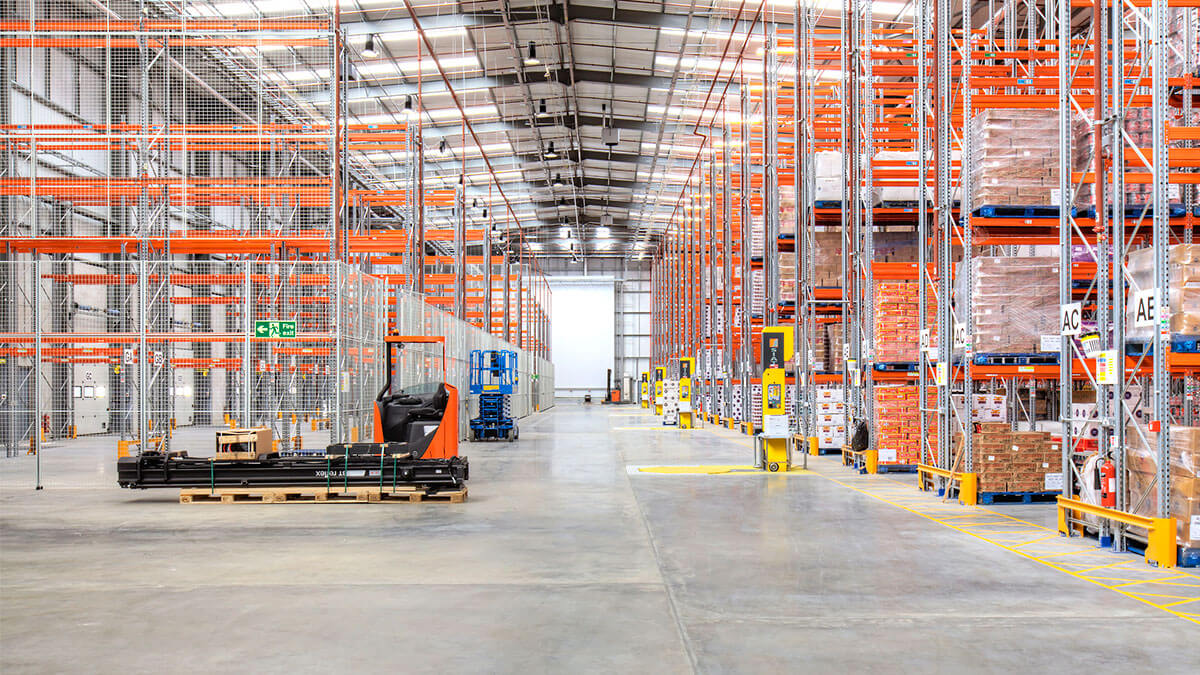 How to Use RFID for Warehouse Inventory Management
Efficient inventory management is essential for every warehouse. Companies need to know what products are in stock, where they are located, when they were received, and when they should be shipped. However, warehouses that rely on manual counting, barcode scanning, or paper-based records often struggle with inaccurate inventory data, misplaced goods, slow stocktaking, and high labor costs.
Radio Frequency Identification, commonly known as RFID, provides a faster and more automated way to manage warehouse inventory. RFID technology allows warehouses to identify, locate, and track products without requiring employees to scan every item individually. With a properly designed RFID system, businesses can improve inventory accuracy, reduce operational errors, accelerate warehouse processes, and obtain real-time visibility into inventory movements.
This article explains how to use RFID for warehouse inventory management and what companies should consider when implementing an RFID solution.
RFID warehouse inventory management is the use of RFID tags, readers, antennas, software, and network systems to identify and track goods throughout warehouse operations.
An RFID tag contains a microchip and an antenna. The chip stores identification information, such as a product code, serial number, batch number, or Electronic Product Code. When the tag enters the reading range of an RFID reader, the reader sends radio waves to activate the tag and receive its stored information.
Unlike traditional barcodes, RFID tags do not always require direct line-of-sight scanning. Depending on the RFID frequency, tag type, reader power, environmental conditions, and warehouse layout, an RFID reader can identify multiple tagged items at the same time.
This makes RFID particularly useful in warehouses where large quantities of products, pallets, cartons, containers, tools, or returnable assets must be processed quickly.
A complete RFID warehouse inventory management system usually includes several hardware and software components.
RFID tags are attached to the objects that need to be identified. Warehouses can place RFID tags on individual products, cartons, pallets, bins, racks, containers, or reusable assets.
Passive UHF RFID tags are widely used in warehouse applications because they are relatively inexpensive and can be read from several meters away under suitable conditions. For high-value assets or applications requiring longer reading distances, active RFID tags may be used.
The correct tag must be selected according to the material of the object. Standard RFID labels are suitable for cardboard boxes, plastic packaging, clothing, and many general products. On-metal RFID tags are required for metal equipment, tools, containers, and machinery. Special RFID tags may also be needed for liquids, cold-chain environments, outdoor storage, or high-temperature applications.
RFID readers transmit and receive radio signals to communicate with RFID tags. Fixed RFID readers are normally installed at warehouse entrances, dock doors, conveyor lines, production exits, and other important checkpoints.
Handheld RFID readers are used for mobile inventory counting, product searching, exception handling, and stock verification. They allow employees to walk through the warehouse and identify many tagged items without scanning them one by one.
Antennas determine the direction and coverage of the RFID reading area. A fixed RFID reader can connect to one or more antennas. Antennas may be installed above doors, beside conveyor belts, around portals, under worktables, or near storage zones.
Antenna placement is important because poor positioning can create missed reads or unintended reads from nearby areas.
RFID middleware receives raw data from RFID readers, filters duplicate reads, manages devices, applies business rules, and sends useful information to warehouse management software.
The RFID system can be integrated with a Warehouse Management System, Enterprise Resource Planning system, inventory platform, or manufacturing execution system. This allows RFID events to update inventory quantities and locations automatically.
RFID should not be treated as a simple replacement for barcode labels. Successful implementation requires a clear understanding of warehouse processes, inventory units, environmental conditions, and business objectives.
Before purchasing RFID equipment, the warehouse should identify its main operational problems.
Common problems include inaccurate inventory records, long stocktaking times, lost pallets, incorrect picking, unidentified goods, shipping errors, and limited visibility of product movements.
The company should also define measurable goals. For example, the objective may be to increase inventory accuracy, reduce annual stocktaking time, prevent unauthorized product movement, improve order fulfillment, or track returnable containers.
A clearly defined objective helps determine the required RFID system architecture.
Not every warehouse needs to tag every individual product. RFID can be implemented at different identification levels.
Item-level tagging provides the highest level of visibility because every product receives its own RFID tag. It is suitable for apparel, electronics, medical products, luxury goods, and other items that require detailed traceability.
Carton-level tagging is often used when products are stored and shipped in boxes. Each carton receives a unique RFID identity.
Pallet-level tagging is suitable for warehouses that mainly receive, store, and ship full pallets. It is generally less expensive and easier to implement than item-level tagging.
Warehouses can also tag bins, totes, racks, forklifts, tools, and reusable transport items. The tagging level should match the company’s operational requirements and expected return on investment.
Tag selection is one of the most important parts of an RFID project. An RFID tag that works well on cardboard may perform poorly when attached to metal or placed near liquid.
The tag should be tested on the actual product, packaging material, mounting position, and operating environment. Important factors include reading distance, tag orientation, storage temperature, humidity, chemical exposure, physical impact, and available label space.
The tag must also comply with the RFID frequency regulations of the country or region where it will be used. For international logistics operations, global frequency compatibility may be required.
RFID reading points should be installed at locations where inventory status or location changes.
At the receiving dock, RFID readers can automatically identify incoming pallets or cartons. The system can compare the received goods with the purchase order and immediately detect missing, unexpected, or incorrect items.
At warehouse entrances, RFID portals can record when goods move from the receiving area into storage.
In picking and packing areas, RFID readers can verify whether the correct products have been selected for an order.
At shipping doors, RFID systems can confirm that the correct goods are loaded onto the correct vehicle. If an incorrect pallet approaches the shipping area, the system can generate an alert.
RFID readers can also be installed on conveyor systems, forklifts, storage cabinets, intelligent shelves, or automated warehouse equipment.
RFID data becomes more valuable when it is connected to the existing warehouse management system.
For example, when an RFID-tagged pallet passes through the receiving portal, the RFID system can automatically create a receiving record. When the pallet is moved into a storage zone, its location can be updated. When it leaves through the shipping door, the system can deduct it from available inventory.
The integration should define how RFID events affect inventory status. It should also include rules for duplicate readings, damaged tags, unidentified items, manual adjustments, and system exceptions.
Without proper data filtering, a tag may be read repeatedly while remaining within the reading field. RFID middleware should convert these repeated signals into a single meaningful inventory event.
A warehouse should normally begin with a limited pilot project rather than immediately deploying RFID throughout the entire facility.
The pilot can focus on one product category, one warehouse zone, one receiving door, or one inventory process. During testing, the company should evaluate tag performance, reader coverage, data accuracy, employee workflow, software integration, and exception handling.
The pilot should use real products and real warehouse conditions. Factors such as metal shelves, liquids, forklifts, nearby RFID portals, and product stacking patterns can affect reading performance.
After identifying and correcting problems, the system can be expanded gradually.
RFID can support inventory management throughout the entire warehouse workflow.
When tagged goods arrive, fixed readers can identify multiple pallets or cartons as they are unloaded. The system can automatically match the RFID data with purchase orders and advance shipping notices.
This reduces manual data entry and allows receiving employees to identify discrepancies immediately.
RFID can help confirm that products are placed in the correct warehouse location. Employees can use handheld readers, forklift-mounted readers, or zone-based RFID systems to associate goods with storage areas.
If a pallet is placed in the wrong location, the warehouse management system can generate a warning.
Inventory counting is one of the most common RFID warehouse applications. Employees can use handheld RFID readers to walk through aisles and identify tagged inventory rapidly.
Because RFID does not require each tag to be aligned with a scanner, stocktaking can be completed much faster than traditional barcode counting. The system can compare the scanned RFID data with system records and identify missing or unexpected products.
When an item is missing, employees can use the search mode of a handheld RFID reader. The device can indicate when the user is moving closer to the target tag.
This function is useful for locating misplaced products, tools, equipment, documents, and high-value assets.
RFID can verify picked products before packing. The system can compare the RFID identities of the selected goods with the order list.
Incorrect items, missing quantities, or duplicate products can be detected before shipment. This helps reduce customer complaints, returns, and additional transportation costs.
At the shipping dock, RFID portals can confirm the identity of outgoing goods. The system can verify the shipment against the customer order and delivery plan.
RFID can also record the exact time when products leave the warehouse, improving traceability and shipment documentation.
One of the main benefits of RFID is improved inventory accuracy. Automatic identification reduces manual recording errors and provides more reliable information about stock quantities and movements.
RFID also increases operational speed. Multiple tags can be identified simultaneously, which reduces the time required for receiving, counting, locating, and shipping inventory.
Real-time visibility is another important advantage. Managers can obtain more current information about where goods are stored and how they move through the warehouse.
RFID can also reduce labor costs by decreasing repetitive scanning and manual stocktaking activities. Employees can focus on exception handling and higher-value operational tasks.
Additional benefits include improved order accuracy, reduced product loss, better traceability, faster investigation of inventory discrepancies, and more efficient use of warehouse space.
Although RFID offers many advantages, several challenges must be managed.
Metal, liquids, dense product stacking, and electromagnetic interference can affect RFID performance. Warehouses should conduct site surveys and tag tests before full deployment.
Uncontrolled reading zones may cause a reader to identify tags outside the intended area. Reader power, antenna direction, shielding, and software filtering should be adjusted to create accurate reading zones.
Integration with existing systems can also be complex. RFID data must be connected with warehouse processes, product records, location structures, and business rules.
Companies should also consider tag costs, hardware costs, installation expenses, software development, employee training, and system maintenance. The financial return is usually stronger when RFID addresses a specific operational problem rather than being installed without clear objectives.
A successful RFID project should begin with a detailed process analysis and a realistic business case. Companies should identify where RFID can create measurable value and prioritize the most important use cases.
Tags should always be tested on actual products. Reader and antenna configurations should be tested under normal warehouse conditions, including peak operating periods.
Employees should receive training on how RFID changes their work processes and how to handle exceptions. The warehouse should also establish procedures for damaged tags, unreadable products, inventory mismatches, and manual corrections.
Finally, the RFID system should be monitored continuously. Read rates, inventory accuracy, processing time, exception frequency, and operational savings should be reviewed regularly.
RFID provides warehouses with a more automated and accurate way to manage inventory. By attaching RFID tags to products, cartons, pallets, containers, or assets, companies can identify and track inventory throughout receiving, storage, counting, picking, and shipping operations.
However, successful RFID warehouse inventory management depends on more than installing readers and tags. Companies must select suitable RFID tags, design accurate reading zones, integrate RFID data with warehouse software, test the system in real operating conditions, and train employees.
When properly implemented, RFID can improve inventory accuracy, shorten stocktaking time, reduce picking and shipping errors, lower labor requirements, and provide better visibility across warehouse operations. For warehouses seeking to improve efficiency and prepare for greater automation, RFID can become an important part of a modern inventory management strategy.

Detailed information and PDF

Support email contact.

Professional technical guidance.

Support email contact.



LINK

Youtube

leave a message
Scan to Wechat/Whatsapp :



 IPv6 Network Supported