
leave a message
If you are interested in our products and want to know more details,please leave a message here,we will reply you as soon as we can.




Best purchase I’ve made this winter! The color and knitting are exquisite and it’s so comfy! Went from NYC to Miami without ever taking it off. Super cute!!
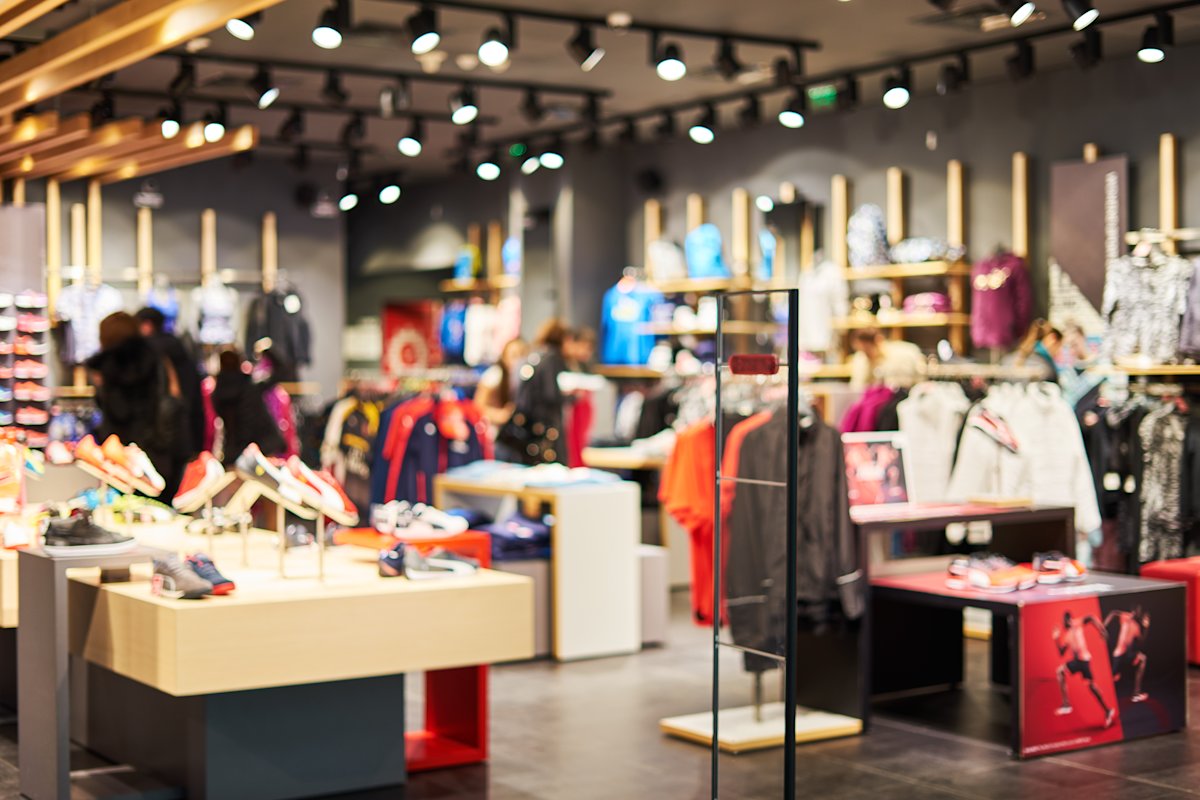 RFID in Retail:
Retailers operate in an environment where inventory accuracy directly affects sales, customer satisfaction, labor efficiency, and profitability. When inventory records do not match the actual products available in stores, retailers may face out-of-stock situations, overstocking, misplaced merchandise, delayed replenishment, and lost sales opportunities.
Traditional inventory management methods, such as manual counting and barcode scanning, are still widely used. However, these methods often require employees to scan products one at a time and maintain a direct line of sight between the barcode and the scanner. In large stores or retail chains with thousands of stock-keeping units, this process can be slow, labor-intensive, and vulnerable to human error.
Radio Frequency Identification, commonly known as RFID, provides a more automated and efficient way to identify, count, locate, and manage retail inventory. By attaching RFID tags to products and using RFID readers to collect data, retailers can improve inventory visibility across distribution centers, stockrooms, sales floors, fitting rooms, checkout areas, and other operational zones.
This article explains how RFID improves inventory accuracy and store operations, as well as how retailers can implement the technology successfully.
RFID is an automatic identification technology that uses radio waves to communicate with electronic tags. An RFID system usually consists of RFID tags, readers, antennas, middleware, and inventory management software.
Each RFID tag contains a microchip and an antenna. The chip stores information such as a product identifier, serial number, Electronic Product Code, batch number, or other data related to the tagged item.
When an RFID tag enters the reading range of an RFID reader, the reader sends a radio signal to the tag. The tag responds by transmitting its stored information back to the reader. The data is then transferred to a retail inventory platform, warehouse management system, enterprise resource planning system, or point-of-sale system.
In retail applications, passive UHF RFID tags are commonly used because they are small, relatively affordable, and capable of being read from several meters away under suitable conditions. They can be embedded in price labels, hangtags, packaging, care labels, or product security devices.
Unlike barcodes, RFID tags do not always require direct line-of-sight scanning. A reader can identify multiple tags within its reading field, allowing employees to count dozens or even hundreds of products in a short period.
A retailer’s inventory system may show that a product is available even when it is missing from the shelf, stored in the wrong location, damaged, stolen, or already sold. This gap between system inventory and physical inventory can create serious operational problems.
For example, a customer may check a retailer’s website and see that a product is available at a nearby store. After arriving, the customer discovers that the item cannot be found. This situation can damage trust and reduce the likelihood of future purchases.
Inaccurate inventory data can also prevent employees from replenishing shelves correctly. A product may remain in the stockroom while the sales floor is empty because the system does not recognize that replenishment is needed.
Retailers may also order unnecessary stock when inventory records are lower than the actual quantity. This can lead to excess inventory, markdowns, storage costs, and reduced cash flow.
RFID helps address these problems by providing faster and more frequent visibility into the location and status of individual products.
One of the main reasons retailers adopt RFID is to improve inventory accuracy at the item level.
With barcode-based inventory counting, employees typically scan each product individually. In contrast, a handheld RFID reader can identify many tagged items at once as an employee walks through a store, stockroom, or warehouse.
This makes it possible to perform inventory counts more frequently. Instead of conducting a full inventory count only once or twice a year, stores may count products weekly, daily, or even multiple times per day for selected categories.
Frequent counting allows retailers to identify discrepancies earlier. Missing, misplaced, or unexpected products can be investigated before they cause larger operational problems.
RFID also provides each item with a unique digital identity. Two products with the same model, size, and color can have different RFID serial numbers. This allows retailers to track individual items rather than only recording the total quantity of a product category.
Item-level identification is especially valuable in apparel, footwear, cosmetics, electronics, jewelry, sporting goods, and other retail sectors with many product variations.
Manual inventory counting can require many employees and may disrupt normal store operations. Workers may need to scan barcodes individually, move products, open boxes, or close sections of the store temporarily.
RFID significantly reduces the time required for inventory counting. Employees can use handheld readers to scan shelves, racks, drawers, cabinets, cartons, and stockroom areas without handling every item.
The reader collects RFID tag data automatically and sends it to the inventory system. The system then compares the physical count with expected inventory records.
This faster process allows stores to count inventory without significantly affecting customers or store opening hours. It can also reduce overtime and temporary labor requirements during annual stocktaking.
More frequent inventory counts create a continuous cycle of inventory correction. As a result, retailers can maintain more reliable information throughout the year rather than discovering large discrepancies during an annual audit.
A product cannot generate revenue if it is not available on the sales floor. Even when a store has stock in the backroom, customers may experience an out-of-stock situation if employees do not know that the shelf needs replenishment.
RFID helps retailers monitor the movement of products between stockrooms and sales areas. When a shelf quantity falls below a predefined level, the system can generate a replenishment task for store employees.
Staff can use handheld RFID readers to locate the required products quickly. The reader may display signal strength or provide audio feedback as the employee moves closer to the selected item.
This reduces the time spent searching through cartons, shelves, and storage areas. Faster replenishment improves product availability and increases the chance that customers will find the products they want.
RFID data can also help retailers identify repeated shelf availability problems. If certain products frequently remain in the stockroom, managers can adjust replenishment procedures, staffing levels, or store layouts.
Misplaced merchandise is a common retail problem. Customers may leave products in the wrong department, fitting room, checkout area, or display zone. Employees may also store returned items incorrectly.
Without RFID, locating a missing item may require a manual search. With RFID, employees can enter the product identifier into a handheld reader and search for the specific tag.
As the employee approaches the target item, the device can provide stronger visual, audio, or vibration feedback. This function is sometimes described as a geiger-counter-style search mode.
Item search can help employees locate products for customers, complete online orders, process returns, and correct inventory discrepancies.
The ability to find products quickly is particularly important for stores that support buy-online-pick-up-in-store, ship-from-store, and same-day delivery services.
Modern customers expect retailers to provide a consistent shopping experience across physical stores, websites, mobile applications, and delivery platforms.
However, omnichannel retail depends on accurate inventory data. A retailer should not promise an item for store pickup or home delivery unless the product is physically available and can be located.
RFID improves the reliability of store inventory information. When inventory accuracy increases, retailers can make more store stock available for online orders with greater confidence.
This supports several omnichannel fulfillment models, including:
Buy online and pick up in store
Reserve online and try in store
Ship from store
Same-day local delivery
Store-to-store transfers
Online return processing
RFID can also help employees verify that the correct item has been selected for an online order. Before the product is packed or handed to the customer, its RFID tag can be compared with the order information.
This reduces picking errors and improves fulfillment speed.
RFID can improve retail operations before products reach the sales floor.
At a distribution center or store receiving area, RFID readers can identify tagged cartons and individual items as they arrive. The system can compare the received products with purchase orders, shipment notices, or transfer documents.
If items are missing, duplicated, or incorrect, employees can identify the discrepancy earlier.
RFID can also reduce the need to open every carton and scan products individually. Depending on packaging materials, tag placement, reader configuration, and product characteristics, several tagged items may be identified while still inside a carton.
After receiving, the products can be assigned to a stockroom location. RFID readers can help track their movement and support more accurate storage records.
Improved receiving accuracy reduces inventory problems later in the retail process.
Apparel retailers can use RFID to improve fitting room operations and understand customer behavior.
RFID readers installed near fitting rooms can identify which products customers take inside and which products they leave behind. The system can record information such as product category, size, color, and time spent in the fitting room.
This data can help retailers understand which items attract customer interest but do not convert into sales. For example, a product may be frequently tried on but rarely purchased, which may indicate problems with fit, price, fabric, or design.
RFID can also help fitting room staff manage abandoned merchandise. Employees can identify items that need to be returned to the correct sales floor location.
Careful system design is important in fitting room applications. Retailers should define clear privacy policies and avoid collecting unnecessary personal information.
RFID can also support checkout operations. Instead of scanning the barcode on each item individually, an RFID-enabled checkout system may identify multiple products placed in a designated reading area.
This can reduce transaction time and improve the customer experience, especially when customers purchase many items.
Self-checkout stations can also use RFID to simplify product identification. The system can display the detected items and allow the customer to verify the purchase before payment.
However, checkout RFID systems require controlled reading zones. The reader must identify only the products involved in the transaction and avoid reading nearby merchandise.
Retailers may also combine RFID with electronic article surveillance or other loss-prevention systems.
Product returns can create inventory inaccuracies if returned items are not identified, inspected, and restocked correctly.
RFID allows retailers to identify returned products quickly. The unique tag identity can be linked to purchase records, product information, and return status.
After inspection, the system can update the item as available for resale, damaged, under review, or scheduled for return to the supplier.
RFID can also improve reverse logistics by tracking returned goods as they move from stores to distribution centers, repair facilities, liquidation partners, or suppliers.
Better return visibility reduces processing delays and prevents returned products from remaining outside available inventory records.
Retail shrinkage can result from theft, administrative errors, supplier mistakes, damage, and process failures.
RFID does not eliminate shrinkage by itself, but it can provide more detailed information about when and where inventory discrepancies occur.
For example, RFID readers may record that a tagged product moved through a receiving door, stockroom entrance, sales floor zone, or store exit. By comparing these movement records with sales and transfer data, retailers can identify unusual events.
RFID can also help distinguish between products that are missing, misplaced, sold, transferred, or never received.
When combined with surveillance systems, point-of-sale information, alarms, and store procedures, RFID can support a more data-driven loss-prevention strategy.
Retail employees spend significant time counting inventory, searching for products, replenishing shelves, checking deliveries, and correcting stock records.
RFID automates or accelerates many of these activities.
Employees can complete inventory counts faster, find products more easily, and receive prioritized replenishment tasks. This reduces repetitive manual work and allows staff to spend more time serving customers, maintaining displays, and supporting sales.
Managers can also use RFID data to plan labor more effectively. For example, the system may identify which departments require additional replenishment or which stores have unusually high inventory discrepancies.
RFID should be designed to support employees rather than create unnecessary complexity. Simple interfaces, clear procedures, and proper training are important for successful adoption.
RFID generates detailed data about product availability, movement, location, and status.
Retailers can use this information to analyze inventory turnover, shelf availability, fitting room activity, replenishment performance, product movement, and store-level demand.
More accurate data supports better purchasing and allocation decisions. Retailers can identify which stores need additional stock and which locations have excess inventory.
RFID can also help evaluate promotions and visual merchandising. If products are moved to a promotional display, the retailer can compare item movement and sales performance before and after the change.
Over time, RFID data can support more accurate demand forecasting and inventory optimization.
RFID implementation requires careful planning.
The performance of an RFID tag can be affected by metal, liquids, dense packaging, tag orientation, and product placement. Retailers should test tags on actual products before large-scale deployment.
Reader placement is also important. Poorly designed reading zones may miss tags or identify products outside the intended area.
Software integration can be complex because RFID data must connect with point-of-sale systems, inventory platforms, warehouse systems, online stores, and product databases.
Retailers must also consider tag costs, reader costs, software development, store installation, training, and ongoing maintenance.
Another challenge is process change. Employees need to understand when to use RFID readers, how to handle unreadable tags, and how to resolve inventory exceptions.
Retailers should begin by identifying a specific business problem, such as low inventory accuracy, slow stocktaking, poor shelf availability, or unreliable omnichannel fulfillment.
A pilot project should be conducted in a small number of stores or within one product category. The pilot should measure inventory accuracy, counting speed, sales floor availability, labor requirements, and order fulfillment performance.
Tags should be tested across different sizes, colors, packaging types, and store environments. Reader settings and antenna positions should be adjusted based on real operating conditions.
Retailers should also establish clear tag application standards. Consistent tag placement improves reading performance across stores and distribution centers.
Integration rules should define how RFID data updates inventory records and how the system handles duplicate reads, damaged tags, returns, transfers, and missing products.
Finally, employees should receive practical training. They should understand not only how to operate the equipment but also how RFID supports store goals and customer service.
RFID is becoming an important technology for retailers seeking to improve inventory accuracy and store efficiency. By giving individual products a unique digital identity, RFID allows retailers to count, locate, replenish, verify, and track merchandise more effectively.
The technology can improve stocktaking, shelf availability, receiving, fitting room management, checkout, returns, omnichannel fulfillment, and loss prevention. It can also reduce manual labor and provide more reliable data for retail decision-making.
Successful implementation requires suitable RFID tags, well-designed reading zones, strong software integration, clear operating procedures, and employee training.
When RFID is deployed around specific business objectives, it can help retailers reduce inventory errors, improve product availability, support faster fulfillment, and provide a more consistent customer experience across physical and digital sales channels.

Detailed information and PDF

Support email contact.

Professional technical guidance.

Support email contact.



LINK

Youtube

leave a message
Scan to Wechat/Whatsapp :



 IPv6 Network Supported