leave a message
leave a message
If you are interested in our products and want to know more details,please leave a message here,we will reply you as soon as we can.

Submit
banner

Blog

Home

Blog

  • How RFID Technology Improves Airport Baggage Tracking and Reduces Lost Luggage
    How RFID Technology Improves Airport Baggage Tracking and Reduces Lost Luggage
    Sep 24, 2026
    RFID Applications in Airport Baggage Tracking: Enhancing Accuracy, Efficiency, and Passenger Experience Introduction: The Role of RFID in Modern Airport Baggage Management With the continuous growth of global air transportation, airports are handling an increasing number of passengers and baggage every year. Efficient baggage management has become a critical factor affecting airport operations, airline service quality, and passenger satisfaction. From check-in and security inspection to sorting, aircraft loading, transfer, and final delivery, every piece of baggage must pass through multiple complex processes before reaching its destination. However, traditional barcode-based baggage tracking systems still face several challenges, including scanning failures, limited visibility, manual er...
    Read More
  • RFID in the Pharmaceutical Industry: Applications, Benefits, and Future Trends
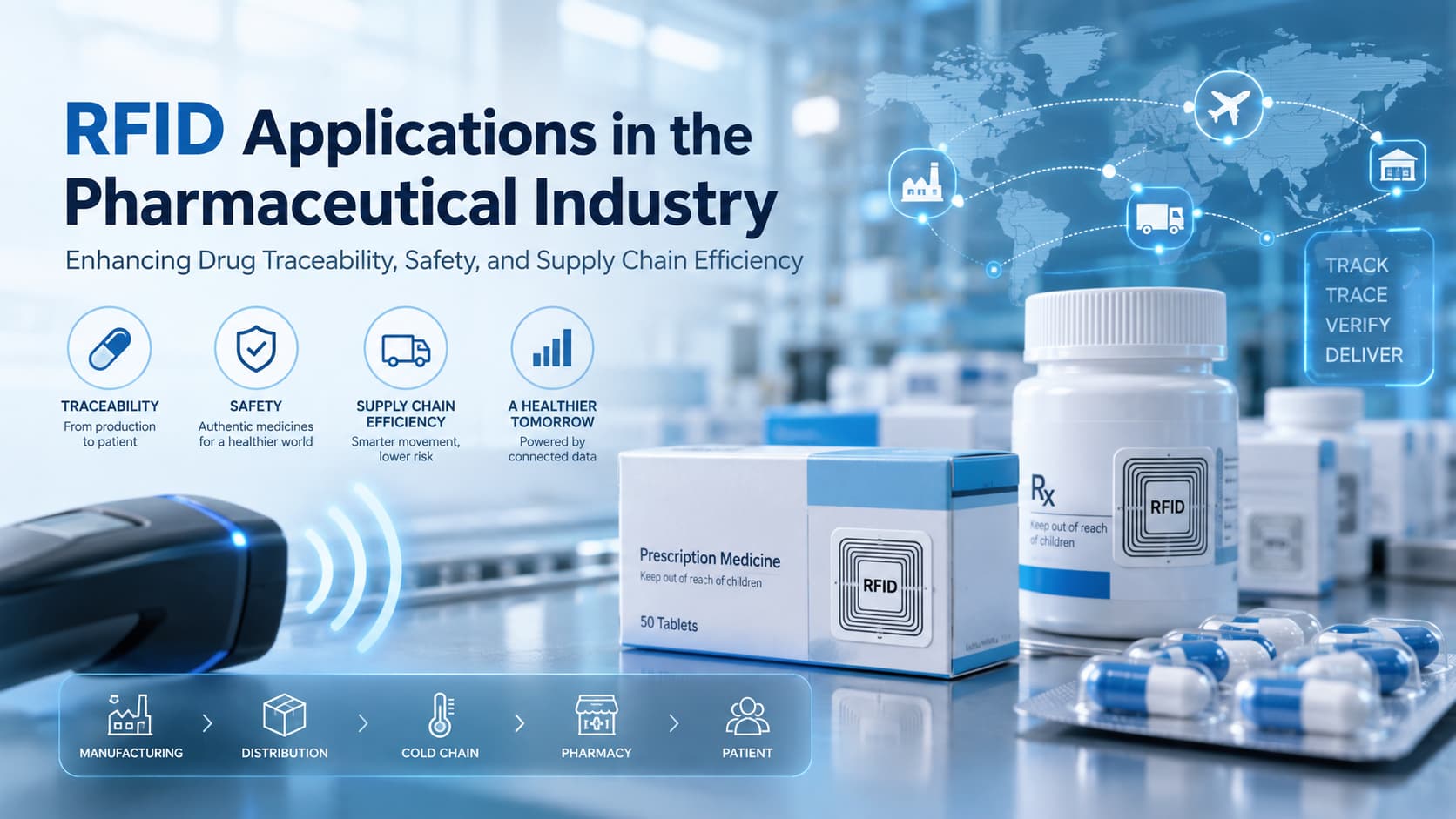
    RFID in the Pharmaceutical Industry: Applications, Benefits, and Future Trends
    Sep 22, 2026
    The pharmaceutical industry is one of the most highly regulated industries worldwide, requiring strict control over product quality, safety, and distribution processes. From raw material procurement and drug manufacturing to packaging, transportation, storage, and final delivery, every stage of the pharmaceutical supply chain must be accurately monitored and documented. However, traditional tracking methods such as barcode systems and manual record-keeping often face limitations, including inefficient data collection, human errors, limited visibility, and difficulties in tracking pharmaceutical products throughout the entire supply chain. With the increasing demand for pharmaceutical safety, regulatory compliance, and supply chain transparency, Radio Frequency Identification (RFID) techno...
    Read More
  • How RFID Technology Is Transforming the Food Supply Chain
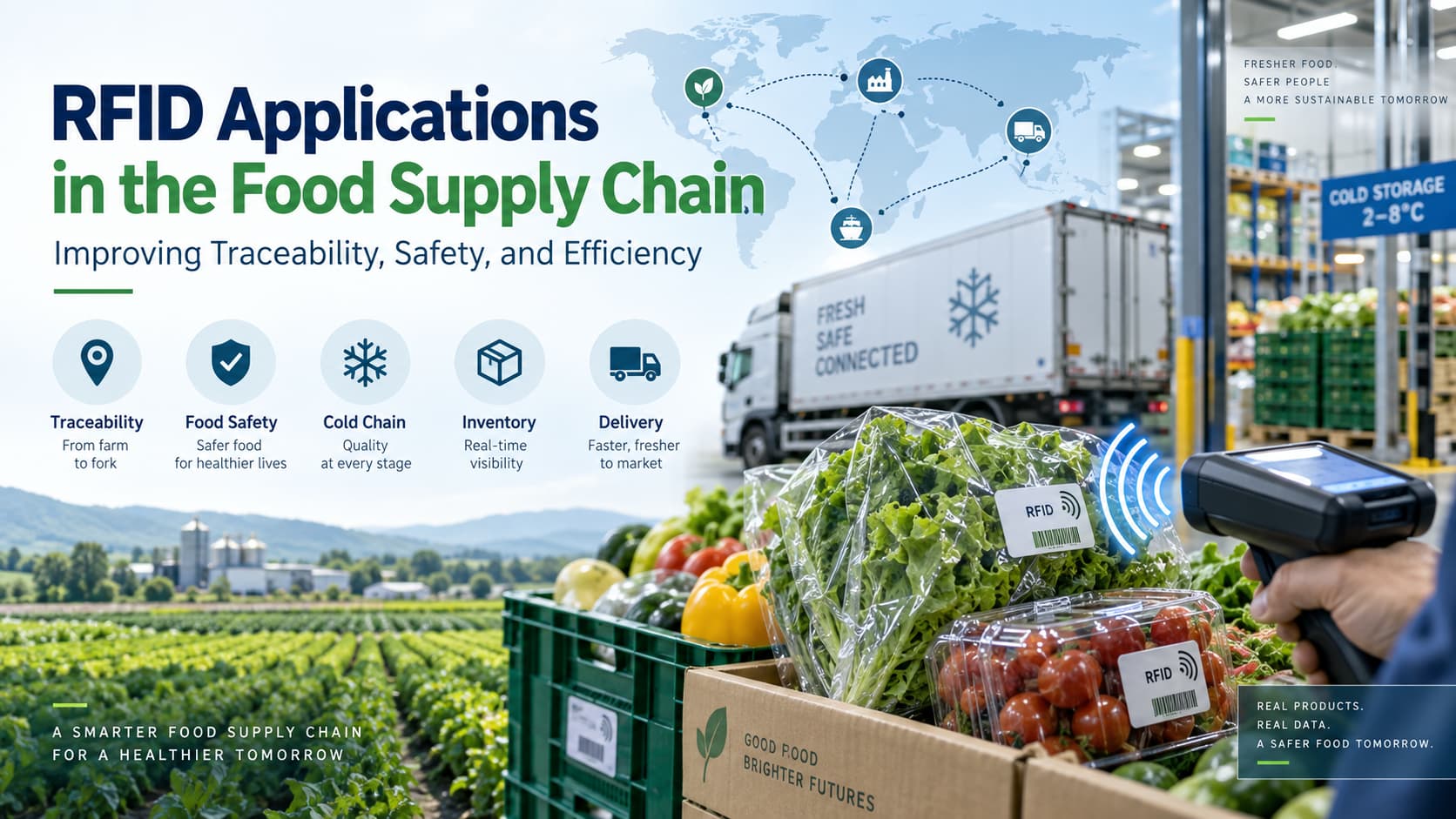
    How RFID Technology Is Transforming the Food Supply Chain
    Sep 22, 2026
    The global food supply chain has become increasingly complex, involving multiple stages from agricultural production and processing to transportation, storage, and retail distribution. As consumers demand safer food products, governments strengthen food safety regulations, and companies seek greater operational efficiency, traditional tracking methods such as barcodes and manual record-keeping are facing significant limitations. Radio Frequency Identification (RFID) technology has emerged as an advanced solution for improving visibility and automation across the food supply chain. By using radio waves to identify and track products automatically, RFID enables real-time data collection, enhanced traceability, inventory optimization, and improved food safety management. Today, RFID applicat...
    Read More
  • How RFID Is Used for Medical Device Tracking
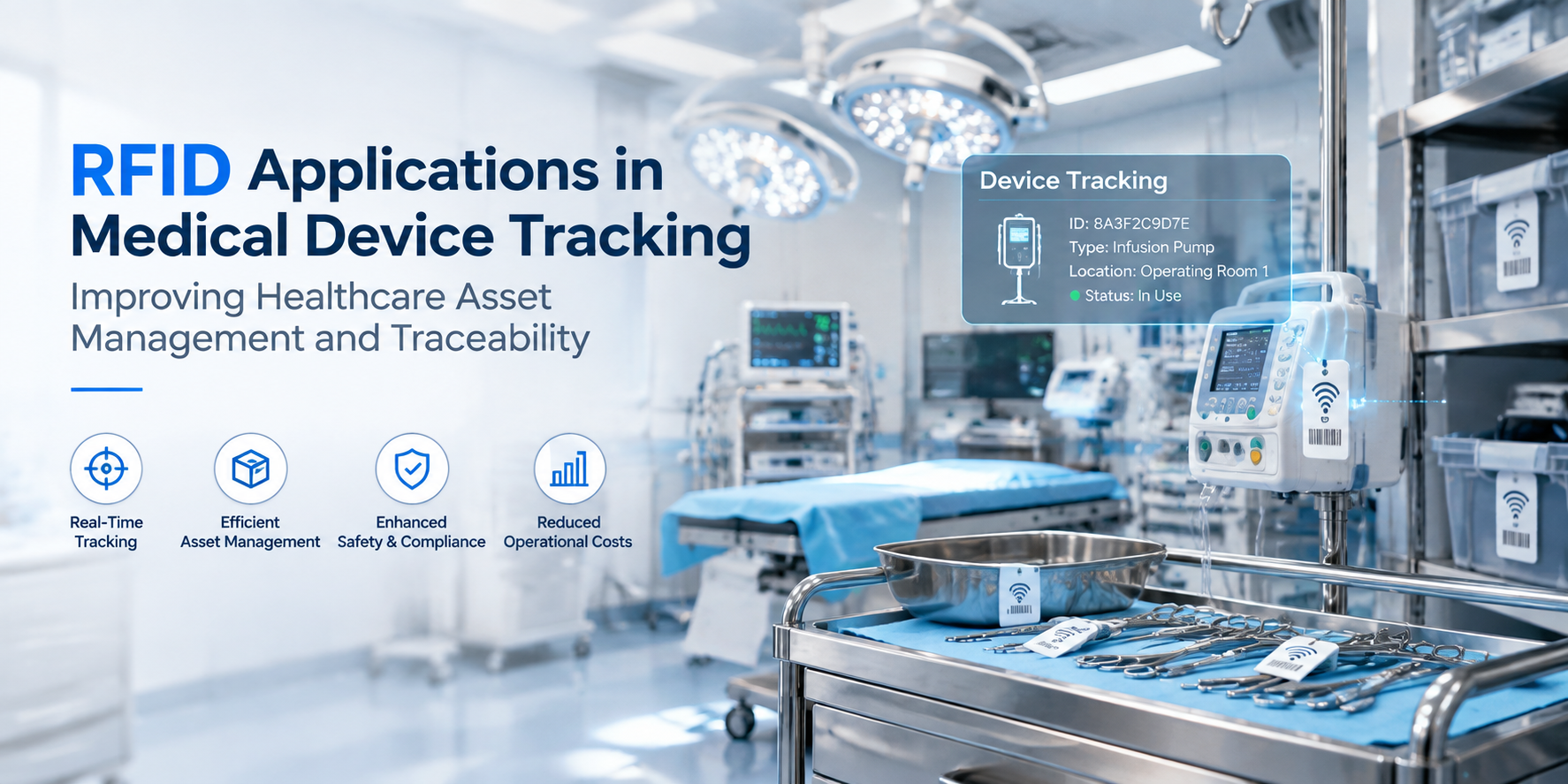
    How RFID Is Used for Medical Device Tracking
    Sep 21, 2026
    In modern healthcare systems, medical devices play a critical role in diagnosis, treatment, surgery, and patient monitoring. From surgical instruments and infusion pumps to implantable devices and emergency equipment, hospitals manage thousands of medical assets every day. However, traditional tracking methods such as manual recording, barcodes, and paper-based inventory systems often create challenges, including misplaced equipment, inefficient asset utilization, inaccurate inventory data, and increased operational costs. Radio Frequency Identification (RFID) technology has emerged as an advanced solution for medical device tracking. By using radio waves to identify and monitor medical equipment automatically, RFID enables hospitals, manufacturers, and healthcare providers to achieve rea...
    Read More
  • How to Choose a UHF RFID Reader?
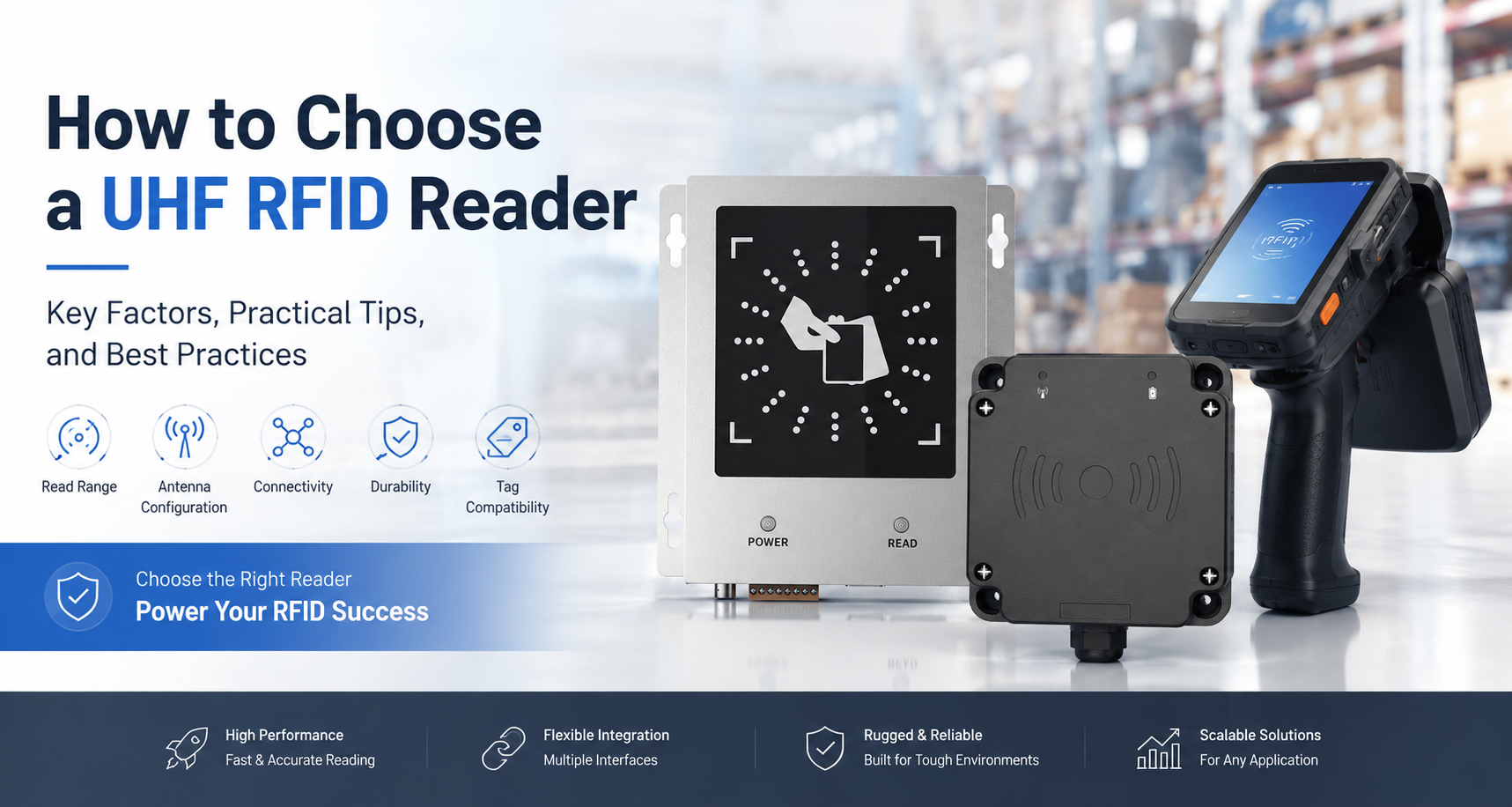
    How to Choose a UHF RFID Reader?
    Aug 31, 2026
    How to Choose a UHF RFID Reader: A Practical Guide for Businesses UHF RFID technology has become an important tool for automatic identification and real-time asset tracking across industries. From warehouse inventory and retail management to industrial production, logistics, vehicle management, and personnel tracking, UHF RFID readers play a central role in collecting data from RFID tags quickly and accurately. However, choosing the right UHF RFID reader is not simply a matter of selecting the device with the longest reading distance or the highest output power. Different applications have different requirements for read range, antenna configuration, connectivity, installation environment, tag density, and system integration. So, how should businesses choose a suitable UHF RFID reader? Th...
    Read More
  • RFID Tags for Metal Assets: How to Choose the Right Tag
    RFID Tags for Metal Assets: How to Choose the Right Tag
    Aug 30, 2026
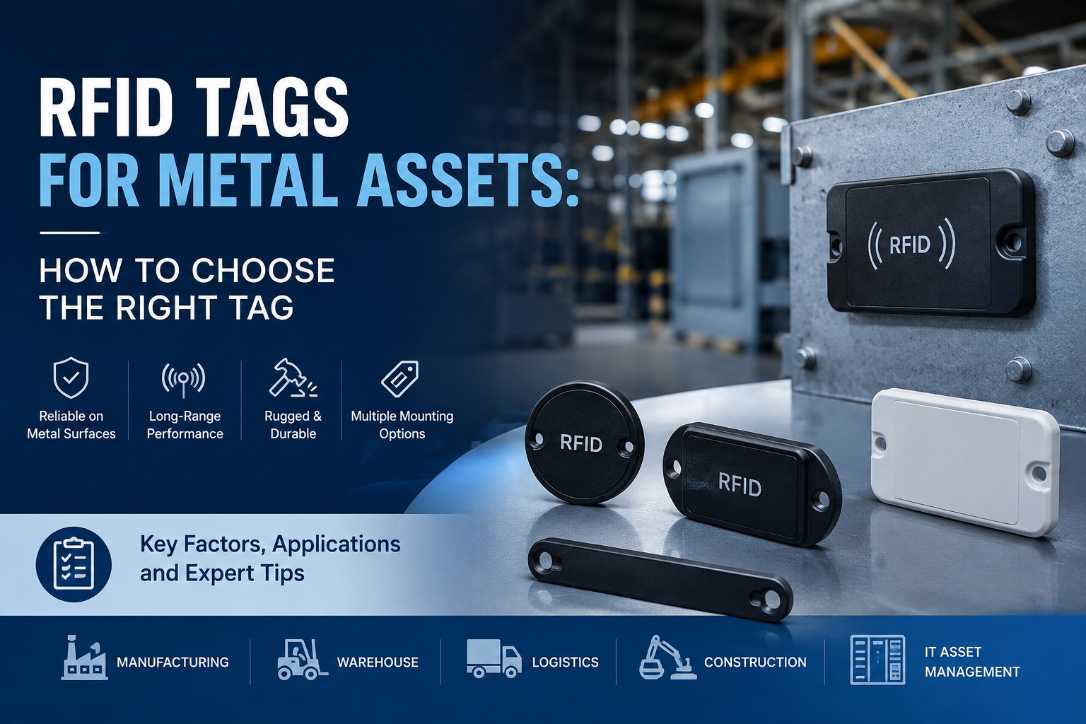
    RFID Tags for Metal Assets: How to Choose the Right Tag Metal assets are everywhere in modern industrial and commercial environments. From machinery, tools, and steel containers to electrical equipment, vehicles, and industrial components, metal assets often represent a significant investment and require accurate identification throughout their lifecycle. However, tracking these assets with conventional RFID tags can be challenging because metal surfaces can interfere with radio-frequency signals. This is where RFID tags specifically designed for metal assets become essential. With the right tag technology, businesses can achieve reliable identification, faster inventory processes, better asset visibility, and improved operational efficiency. But not every RFID tag designed for metal is s...
    Read More
  • How RFID Is Used for Industrial Asset Tracking
    How RFID Is Used for Industrial Asset Tracking
    Aug 29, 2026
    How RFID Is Used for Industrial Asset Tracking Industrial companies manage thousands of assets every day, from production equipment and tools to containers, pallets, spare parts, and maintenance devices. As the scale of operations increases, keeping track of these assets becomes more difficult. Traditional methods such as spreadsheets, paper records, barcodes, and manual inspections can make asset management time-consuming and error-prone. RFID technology provides a more automated and reliable approach. By attaching RFID tags to industrial assets and using RFID readers to collect information, companies can identify, track, and manage assets throughout their entire lifecycle. This makes RFID an increasingly important technology for modern industrial asset tracking. What Is Industrial Asset...
    Read More
  • UHF RFID vs. HF RFID vs. NFC: What’s the Difference?
    UHF RFID vs. HF RFID vs. NFC: What’s the Difference?
    Aug 15, 2026
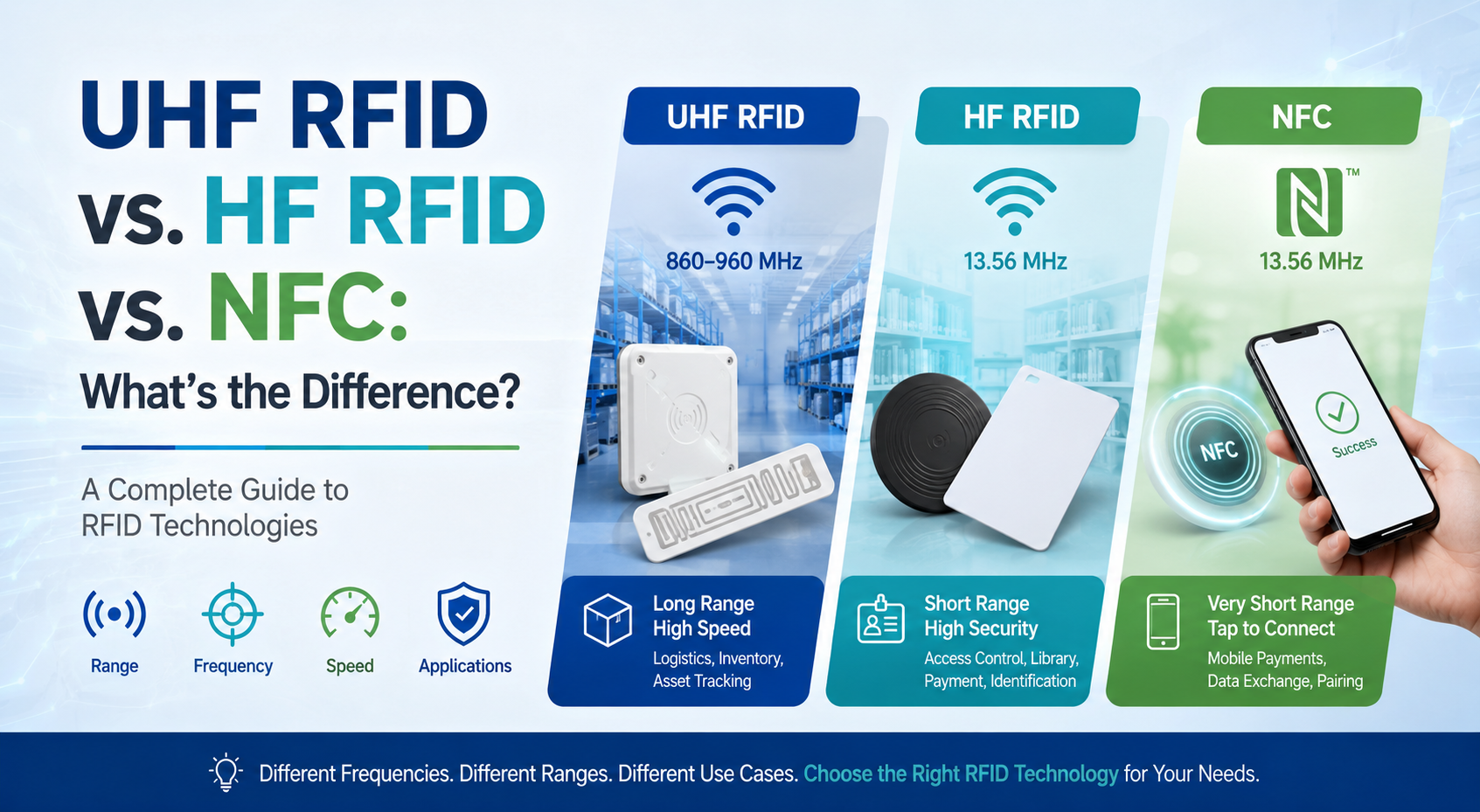
    RFID and NFC technologies are becoming increasingly important in retail, logistics, manufacturing, healthcare, access control, asset tracking, and smart consumer products. Among the most commonly discussed technologies are UHF RFID, HF RFID, and NFC. Although they all use radio-frequency communication, they are designed for different purposes and offer different levels of reading distance, speed, connectivity, and user interaction. Understanding the difference between UHF RFID, HF RFID, and NFC is essential when selecting the right identification or wireless communication technology for a project. Choosing the wrong technology can lead to poor reading performance, unnecessary hardware costs, or an unsatisfactory user experience. This article explains the key differences between UHF RFID,...
    Read More
  • How RFID Improves Retail Inventory Accuracy and Store Operations
    How RFID Improves Retail Inventory Accuracy and Store Operations
    Jul 30, 2026
    RFID in Retail: How It Improves Inventory Accuracy and Store Operations   Retailers operate in an environment where inventory accuracy directly affects sales, customer satisfaction, labor efficiency, and profitability. When inventory records do not match the actual products available in stores, retailers may face out-of-stock situations, overstocking, misplaced merchandise, delayed replenishment, and lost sales opportunities.   Traditional inventory management methods, such as manual counting and barcode scanning, are still widely used. However, these methods often require employees to scan products one at a time and maintain a direct line of sight between the barcode and the scanner. In large stores or retail chains with thousands of stock-keeping units, this process can be slo...
    Read More
  • RFID Warehouse Inventory Management: Benefits, Applications, and Implementation Guide
    RFID Warehouse Inventory Management: Benefits, Applications, and Implementation Guide
    Jul 30, 2026
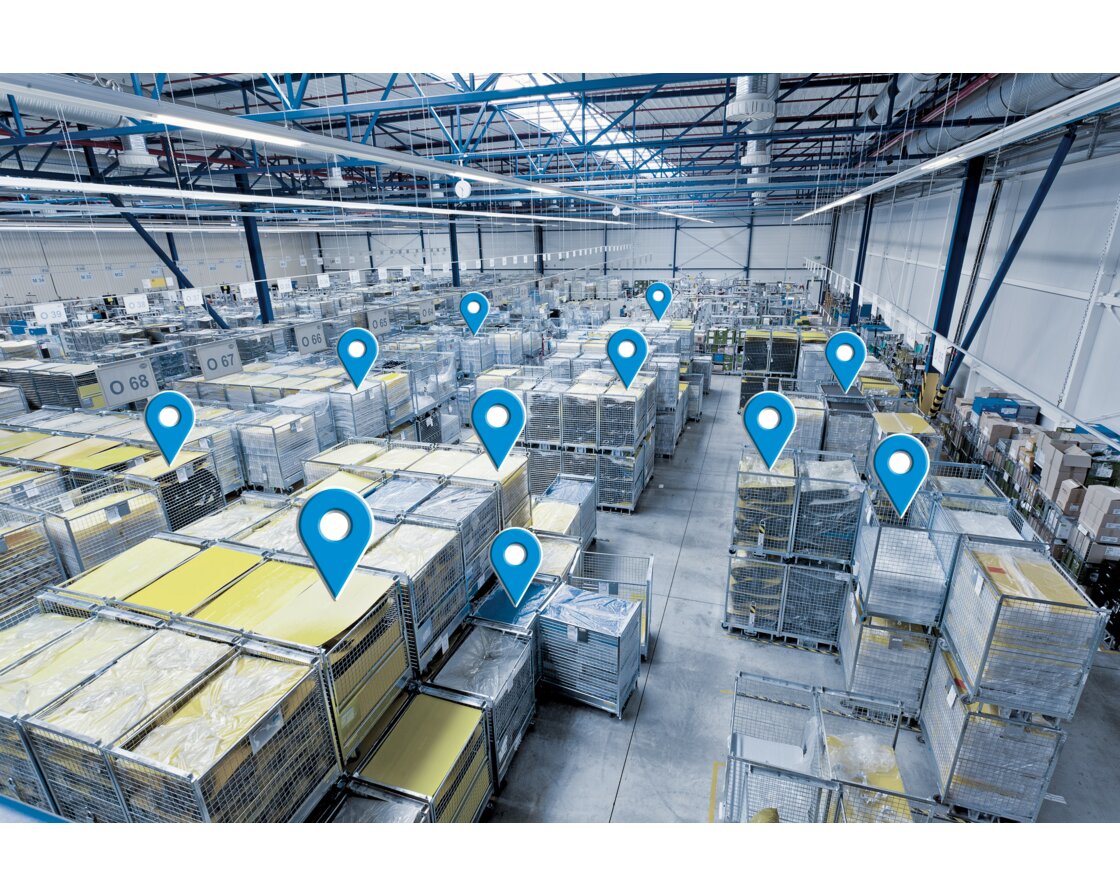
    How to Use RFID for Warehouse Inventory Management   Efficient inventory management is essential for every warehouse. Companies need to know what products are in stock, where they are located, when they were received, and when they should be shipped. However, warehouses that rely on manual counting, barcode scanning, or paper-based records often struggle with inaccurate inventory data, misplaced goods, slow stocktaking, and high labor costs.   Radio Frequency Identification, commonly known as RFID, provides a faster and more automated way to manage warehouse inventory. RFID technology allows warehouses to identify, locate, and track products without requiring employees to scan every item individually. With a properly designed RFID system, businesses can improve inventory accurac...
    Read More
  • RFID Technology in Amusement Parks: Uses, Benefits, and How It Works
    RFID Technology in Amusement Parks: Uses, Benefits, and How It Works
    Jul 16, 2026
    Modern amusement parks are no longer defined only by roller coasters, themed attractions, live shows, and souvenir shops. Behind the scenes, many parks now rely on digital systems to manage visitors, reduce waiting times, improve safety, and create more personalized experiences. One of the most widely used technologies in this transformation is RFID.   So, what is RFID technology used for in amusement parks? RFID technology is commonly used for electronic ticketing, access control, cashless payments, ride reservations, visitor identification, photo collection, child safety, staff management, equipment tracking, and operational data analysis. By placing RFID chips inside wristbands, cards, tickets, or employee badges, amusement parks can connect physical visitor activities with digital...
    Read More
  • What Is an Anti Metal RFID Tag? A Complete Guide to On-Metal RFID Technology
    What Is an Anti Metal RFID Tag? A Complete Guide to On-Metal RFID Technology
    Jul 15, 2026
    What Is an Anti Metal RFID Tag? A Complete Guide to RFID Tags for Metal Surfaces   Radio Frequency Identification, commonly known as RFID, has become an important technology for asset tracking, inventory management, industrial automation, logistics, and supply chain visibility. However, standard RFID tags do not always perform well when they are attached directly to metal objects. Metal can interfere with radio frequency signals, reduce reading distance, and even prevent an RFID tag from being detected. This is where anti metal RFID tags become essential.   So, what is an anti metal RFID tag? An anti metal RFID tag, also known as an on-metal RFID tag or metal-mount RFID tag, is a specially designed RFID tag that can operate effectively when attached to metal surfaces. Unlike ord...
    Read More
1 2 3 4 5 6 7 8 9 10 13 14

leave a message

leave a message
If you are interested in our products and want to know more details,please leave a message here,we will reply you as soon as we can.

Submit
Contact Us:marketing@jtspeedwork.com

Home

Products

whatsApp

contact