![[New release] desktop USB card reader JT-6210](/uploadfile/news/b429bf83428e8a9d925a239f859744b4.jpg)
Desktop USB card reader JT-6210 is designed to meet users in the background or management center for card management products designed. It has a high sensitivity, low operating current, single DC power supply, low price, high performance. This product can read card, write card, authorization, formatting and other operations. Product parameters: Physical Parameters: Size 142mm x 85mm x 20mm Weight 0.2kg Material ABS Antenna Built-in Performance parameters: Working frequency 902~928mhz or865~868mhz Supporting protocol EPC C1 GEN2 ISO18000 - 6C Radio power 0 - 17 dbm Reading range 0 - 60cm Writing range 0 - 10cm Communication interface USB Key board output support Power USB supply Environment Parameters: Working temperature - 20℃- 55℃ Store temperature - 20℃- 55℃ Application: Desktop USB card reader JT-6210 is widely used in a variety of RFID systems. The main applications are: 1, logistics and warehousing management: the flow of goods and storage management and mail, parcels, transport luggage, such as the flow management; 2, intelligent parking management: car park management and charging automation; 3, the production line management: the identification of the production process sentinel; 4, other areas: library management, attendance management, asset management systems.

As digital transformation accelerates worldwide, RFID (Radio Frequency Identification) technology has become a key driver of smart manufacturing, intelligent logistics, and the Internet of Things (IoT). Recently, our company was honored to represent China’s RFID industry at the G20 Summit, joining global leaders and innovators to discuss the future of digital economy, intelligent connectivity, and sustainable development. This participation marks not only the growing global influence of China’s RFID sector but also highlights the strength and innovation of “Made in China, Intelligent in China.” Rooted in China, Connected to the World As a leading RFID technology provider in China, our company is committed to the vision of “Data Made Simple.” We specialize in the development and manufacturing of RFID readers, antennas, tags, and integrated IoT solutions. Over the years, we have built a strong presence across industries such as smart manufacturing, warehouse management, livestock tracking, intelligent transportation, and retail automation. With outstanding performance and reliability, our products are now widely adopted in markets across Asia, Europe, and the Americas. The G20 Summit, themed “Building an Inclusive Digital Economy for a Smarter Future,” gathered global government officials, industry leaders, and technology experts to exchange ideas on innovation, sustainability, and the future of industrial intelligence. During the summit, our company representative delivered a keynote speech on “The Role of RFID in Global Smart Manufacturing and Digital Supply Chains,” sharing insights from China’s digital transformation journey and showcasing our technological achievements to an international audience. RFID: Driving the Next Industrial Revolution RFID technology lies at the heart of the Internet of Things. By enabling fast, contactless identification and real-time data collection, RFID is reshaping how industries operate. From smart factories and automated logistics to intelligent transportation systems and unmanned retail, RFID is fueling a new wave of digital efficiency and operational transparency. Our company has independently developed a comprehensive range of UHF RFID modules, industrial readers, ceramic antennas, and flexible tags designed to meet complex application environments. Through proprietary algorithms and integrated systems, we help clients in manufacturing, energy, education, healthcare, and other sectors achieve smart, data-driven operations. By combining RFID with AI, cloud computing, and big data analytics, we are building more connected and intelligent ecosystems that empower enterprises to make faster and smarter decisions. Representing China’s Voice on the Global Stage During the G20 discussions, our representative emphasized that China’s RFID industry is entering a crucial phase of transformation — from “manufacturing” to “intelligent manufacturing.” As the world transitions toward a data-centric economy, RFID has evolved ...
In modern industry and manufacturing, effective management of tools is crucial for ensuring production efficiency and safety. Traditional tool management methods often rely on manual registration and physical inspections, which are not only inefficient but also prone to errors. With the development of information technology, RFID (Radio Frequency Identification) technology-based tool management systems have emerged, providing enterprises with a more efficient and accurate management solution. Working Principle of RFID Technology RFID technology uses radio waves for data transmission and identification. Its basic components include RFID tags, RFID readers, and backend management systems. An RFID tag is a small electronic device, usually consisting of a chip and an antenna, capable of storing information about an item, such as its ID, type, and location. The RFID reader is responsible for communicating with the tags, reading the information contained in them, and transmitting the data to the backend management system for processing. In tool management, each tool is equipped with an RFID tag. Users simply need to bring the RFID reader close to the tool to quickly obtain detailed information about it. This process does not require direct contact or alignment, significantly increasing the speed and accuracy of identification. Advantages of RFID Technology Compared to Traditional Management Efficiency: Traditional tool management often relies on manual checks, which are slow and error-prone. RFID technology enables rapid scanning and batch identification, allowing multiple tools to be recognized at once, greatly improving work efficiency. This advantage is especially pronounced in large factories and warehouses, saving considerable time. Accuracy: Manual management is susceptible to omissions and errors, whereas RFID systems, through automated identification and data transmission, significantly reduce the error rate. Each RFID tag is unique, ensuring data accuracy and reliability. Real-Time Monitoring: RFID technology supports real-time data updates, allowing managers to always be aware of the usage, storage location, and status of tools. This capability helps enterprises quickly identify issues, optimize resource allocation, and improve management efficiency. Data Analysis: The vast amounts of data collected by RFID systems can be deeply analyzed to help enterprises understand tool usage frequency, maintenance cycles, and other information. This data-driven approach supports informed decision-making and promotes scientific management. Cost Reduction: Although the initial investment may be high, RFID systems can effectively reduce labor costs and improve tool utilization over the long term, thereby lowering overall management costs. Additionally, precise management reduces tool loss and damage, leading to further savings. Enhanced Safety: In high-risk industries, tool safety is paramount. RFID systems can track the usage history of tools, ensuring that...
Radio Frequency Identification (RFID) technology has been widely adopted in factory logistics management in recent years. RFID uses radio waves for information transmission and identification, providing efficient and accurate solutions for scheduling and managing logistics vehicles. This article explores the use of RFID tools and their working principles, with a focus on the role and importance of RFID readers in factory logistics vehicle scheduling. RFID Tools and Working Principles An RFID system mainly consists of RFID tags, RFID readers, and a data management system. RFID Tags: RFID tags contain a small chip and an antenna, with the chip storing specific identification information. Depending on the power supply method, RFID tags are classified into active tags (with a built-in power source) and passive tags (powered by the reader). RFID Readers: RFID readers play a crucial role in RFID systems. They are used to send and receive radio waves to communicate with the tags. Here are the detailed working principles and functions of RFID readers: Communication Principle: RFID readers emit radio waves through their antennas. When an RFID tag enters the reader's working range, the tag's antenna receives the radio waves and converts them into electrical energy to activate the chip (for passive tags). The tag chip then transmits a radio signal containing identification information back through the antenna. The reader receives this signal, decodes it, and transmits it to the data management system. Installation Locations: RFID readers can be installed at various key locations, such as factory entrances, warehouse doors, loading platforms, and vehicle passages. Readers can also be mounted on handheld devices for flexible tag reading. Data Processing: RFID readers are not just data transmitters; they also have data processing capabilities. They can filter and preliminarily process the read tag information, reducing data transmission volume and improving system efficiency. Communication Distance: The communication distance of a reader depends on the frequency and antenna power. Ultra-high frequency (UHF) readers typically have longer reading distances (from a few meters to several dozen meters), suitable for long-distance identification of vehicles and goods. Data Management System: The data management system is responsible for collecting and processing data from RFID readers and interfacing with the factory's logistics management system to achieve intelligent vehicle scheduling. Specific Applications of RFID in Factory Logistics Vehicle Scheduling Vehicle Identification and Tracking: By installing RFID tags on logistics vehicles and RFID readers at factory entrances, warehouse doors, and other locations, unique identification and real-time tracking of vehicles can be achieved. Readers read tag information and record the entry and exit times and locations of vehicles, helping managers monitor vehicle dynamics and optimize scheduling plans. Goods Management:...
Radio Frequency Identification (RFID) technology has been widely adopted in factory logistics management in recent years. RFID uses radio waves for information transmission and identification, providing efficient and accurate solutions for scheduling and managing logistics vehicles. This article explores the use of RFID tools and their working principles, with a focus on the role and importance of RFID readers in factory logistics vehicle scheduling. RFID Tools and Working Principles An RFID system mainly consists of RFID tags, RFID readers, and a data management system. RFID Tags: RFID tags contain a small chip and an antenna, with the chip storing specific identification information. Depending on the power supply method, RFID tags are classified into active tags (with a built-in power source) and passive tags (powered by the reader). RFID Readers: RFID readers play a crucial role in RFID systems. They are used to send and receive radio waves to communicate with the tags. Here are the detailed working principles and functions of RFID readers: Communication Principle: RFID readers emit radio waves through their antennas. When an RFID tag enters the reader's working range, the tag's antenna receives the radio waves and converts them into electrical energy to activate the chip (for passive tags). The tag chip then transmits a radio signal containing identification information back through the antenna. The reader receives this signal, decodes it, and transmits it to the data management system. Installation Locations: RFID readers can be installed at various key locations, such as factory entrances, warehouse doors, loading platforms, and vehicle passages. Readers can also be mounted on handheld devices for flexible tag reading. Data Processing: RFID readers are not just data transmitters; they also have data processing capabilities. They can filter and preliminarily process the read tag information, reducing data transmission volume and improving system efficiency. Communication Distance: The communication distance of a reader depends on the frequency and antenna power. Ultra-high frequency (UHF) readers typically have longer reading distances (from a few meters to several dozen meters), suitable for long-distance identification of vehicles and goods. Data Management System: The data management system is responsible for collecting and processing data from RFID readers and interfacing with the factory's logistics management system to achieve intelligent vehicle scheduling. Specific Applications of RFID in Factory Logistics Vehicle Scheduling Vehicle Identification and Tracking: By installing RFID tags on logistics vehicles and RFID readers at factory entrances, warehouse doors, and other locations, unique identification and real-time tracking of vehicles can be achieved. Readers read tag information and record the entry and exit times and locations of vehicles, helping managers monitor vehicle dynamics and optimize scheduling plans. Goods Management:...
In the fast-paced world of retail, efficient inventory management is crucial for meeting consumer demands, minimizing costs, and maximizing profitability. RFID (Radio Frequency Identification) technology has emerged as a transformative tool in reshaping how retailers manage their inventory. This article explores the significant impact of RFID technology in the retail sector, focusing on its applications, benefits, challenges, and future potential. Understanding RFID Technology in Retail RFID technology utilizes electromagnetic fields to automatically identify and track tags attached to objects. Unlike traditional barcodes, RFID tags do not require line-of-sight scanning; they can be read remotely and in bulk, making inventory management faster, more accurate, and less labor-intensive. This capability has revolutionized various aspects of retail operations, from supply chain management to customer experience enhancement. Applications and Benefits Inventory Accuracy and Visibility: One of the primary benefits of RFID in retail is its ability to provide real-time visibility into inventory levels. RFID tags attached to products enable retailers to track items throughout the supply chain, from the warehouse to the store shelves. This visibility helps prevent stockouts, optimize replenishment cycles, and improve overall inventory accuracy. Enhanced Operational Efficiency: RFID technology streamlines inventory counting and auditing processes. With RFID readers strategically placed in store entrances, exits, and storage areas, retailers can conduct inventory checks more frequently and quickly reconcile discrepancies. This efficiency reduces labor costs and minimizes disruptions to daily operations. Optimized Supply Chain Management: RFID facilitates better supply chain visibility and transparency. Retailers can track the movement of goods from suppliers to distribution centers and ultimately to stores. This capability allows for better demand forecasting, efficient logistics planning, and improved collaboration with suppliers and logistics partners. Improved Customer Experience: RFID-enabled inventory management contributes to a seamless shopping experience for customers. Retailers can ensure that products are always available when needed, reduce wait times at checkout, and offer accurate information on product availability. This enhances customer satisfaction and loyalty. Real-World Applications Apparel Retail: Many apparel retailers have adopted RFID to track individual items throughout their lifecycle. RFID tags embedded in clothing tags or labels enable retailers to monitor inventory levels, reduce theft, and enhance merchandising strategies by analyzing customer preferences and buying patterns. Electronics and Consumer Goods: Retailers selling electronics and high-value consumer goods use RFID to combat theft and improve inventory accuracy. RFID tags embedded in products deter theft and provide insights into product movement within stores, enabling ...
Abstract: In view of the current problems of backward data collection methods and lack of production status monitoring methods in agricultural machinery manufacturing workshops, an application solution based on radio frequency identification technology (RFID) was studied. First, on the basis of analyzing the current production status of the enterprise, a data collection scheme and network support architecture based on RFID technology were proposed; secondly, a work-in-progress status tracking system was developed through the Visual Studio 2017 platform and C# language; finally, a corn chopper was selected as the The research object realizes the hardware deployment at the production site and conducts experiments on its production process; the experimental cases show that the system can work quickly and stably, helping the company achieve real-time data collection and visual monitoring of production status, verifying the proposed feasibility and effectiveness of the method. Keywords: agricultural machinery manufacturing workshop; radio frequency identification; data collection; visual monitoring Radio Frequency Identification (RFID) is a non-contact automatic identification technology that can automatically identify stationary or moving objects attached with electronic tags. As an important part of the Internet of Things, it has received great attention at home and abroad, and has been deeply studied by domestic and foreign scholars in aspects such as warehouse management, identity recognition, and production control. In addition, compared with traditional barcode scanning technology, RFID technology has the characteristics of long-distance batch identification, fast information processing speed, and strong adaptability to the environment, making its application advantages in manufacturing workshop data collection, production process monitoring and other fields increasingly obvious, giving The development of informatization in traditional discrete manufacturing has had a huge impact [1]. At present, domestic and foreign scholars have done some theoretical research on the application of RFID technology: Literature [2] summarizes the application model of RFID technology in discrete manufacturing. Literature [3] summarizes the application essence of RFID: monitor the status changes of manufacturing resources and collect related data associated with the changes; and proposes a work-in-process data collection model based on RFID. According to the EPC code structure in the electronic tag, the literature [4] proposes coding rules for associating manufacturing resources to achieve static association and dynamic association of the manufacturing resource processing process. The literature [5-6] proposes an RFID reader optimization deployment algorithm, which can be used under limited conditions. Get the maximum coverage area within the space. Literature [7] proposed the combination of RFID technology and warehouse management system, and developed a selection...
According to relevant statistics, the number of casualties caused by safety accidents in coal mines is at the forefront of safety accidents in the country. The tunnels under the mine are complex and there are many difficulties in carrying out rescue work. At the same time, the management of personnel underground in coal mines is different from the management on the ground. On the one hand, the positioning of personnel underground is limited by the tunnel, so many personnel positioning technologies cannot be realized; on the other hand, the personnel positioning technology underground requires higher anti-interference. . When an accident occurs underground in a coal mine, the most commonly used search and rescue method is infrared detectors. The principle of using infrared detectors is to detect the infrared radiation emitted by the human body to achieve the purpose of positioning and rescue. However, due to the lack of safety measures in coal mines, The presence of gas will cause the infrared propagation to weaken, and it is also susceptible to interference from other infrared heat sources underground, making it less efficient in actual use. In addition to infrared detectors, life detectors are also commonly used. They mainly detect the ultra-low frequency waves emitted by the human heart to locate people. Microwaves have strong penetrability, but they can also detect some people with weak heart beats. some problems. Under this situation, a device capable of real-time positioning has been developed for underground coal mine personnel. It can be used to solve the daily management of personnel and improve labor efficiency during normal work; when an accident occurs, this device can be used to promptly locate Trapped personnel are located. This article proposes a locating device for underground personnel based on RFID technology, hereafter referred to as the RFID rescue locating device. This device can be worn and is small in size, and can be used as a necessary component of underground rescue work. 1 Overall system design 1.1 Design requirements analysis Before designing the RFID rescue positioning device, it is necessary to analyze the positioning needs and technical characteristics of underground coal mine personnel. Finally, a detailed system design can be made. After detailed analysis, 3 requirements must be met: (1) Comes with its own power supply and has long working hours Considering the underground The length of time personnel work in normal work and the timeliness of rescue operations performance, so the system must be able to work for more than 48 hours; Abstract: Due to the complex underground environment and the application of infrared detection and life detection instruments, safety rescue in coal mines is subject to many problems. Limitation, the development of an underground personnel positioning device for coal mine rescue plays a very important role. proposed a method based on RFID technology Based on the analysis of the needs of c...
Categories
New Products
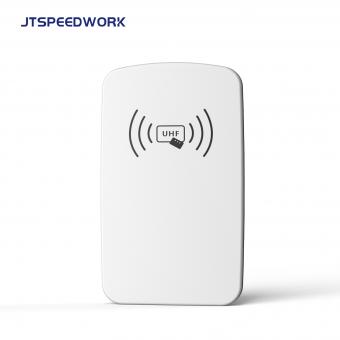
JT-6210 0-1m UHF RFID Desktop USB Reader Writer ISO18000-6C Read More
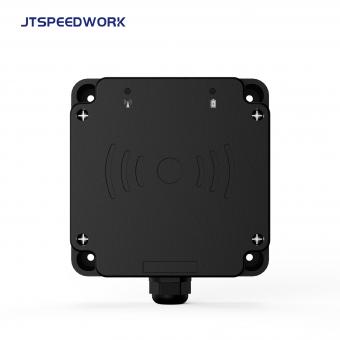
JT-7100 0-3m 860-960MHz UHF RFID Industrial Grade RFID Reader Read More
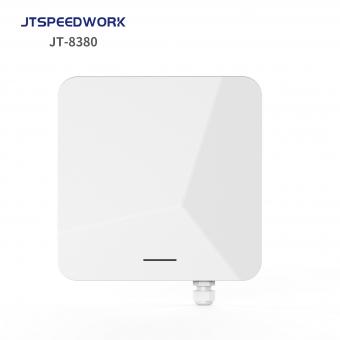
JT-8380 0-6m UHF RFID 860-960MHz Middle Range Integrated Reader Read More
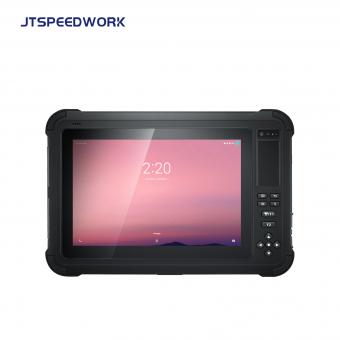
JT-P983 Industrial Tablet Pad RFID Handheld Reader Grade Long Range Android UHF Terminal Bluetooth RFID Reader For Warehouse Read More
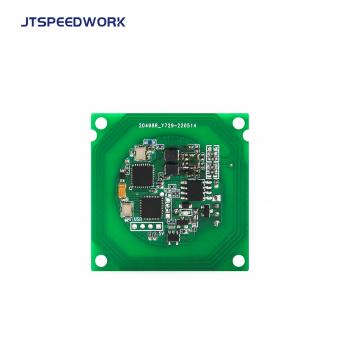
JT-1550 Small Mini HF RFID 13.56MHz Module ISO14443A ISO 15693 Protocol Read More
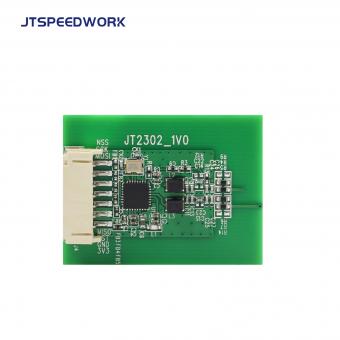
JT-2302A 13.56MHz RFID Module ISO14443A ISO15693 Protocol Read More
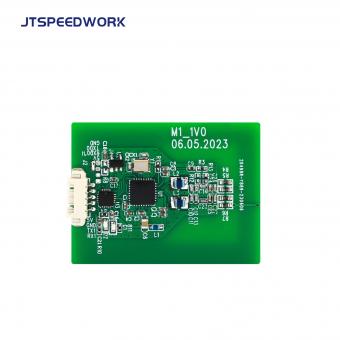
JT-2302 HF RFID 13.56MHz Module ISO14443A ISO15693 Support Mifare1 IC card Read More
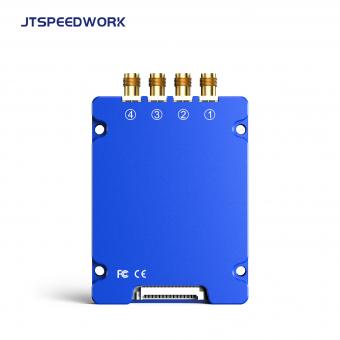
JT-2540 TM200 UHF RFID 4-port Module 860-960MHz TTL Read More
Copyright © 2026 Shenzhen Jietong Technology Co.,Ltd. All Rights Reserved.

IPv6 network supported

 English


