
leave a message
If you are interested in our products and want to know more details,please leave a message here,we will reply you as soon as we can.



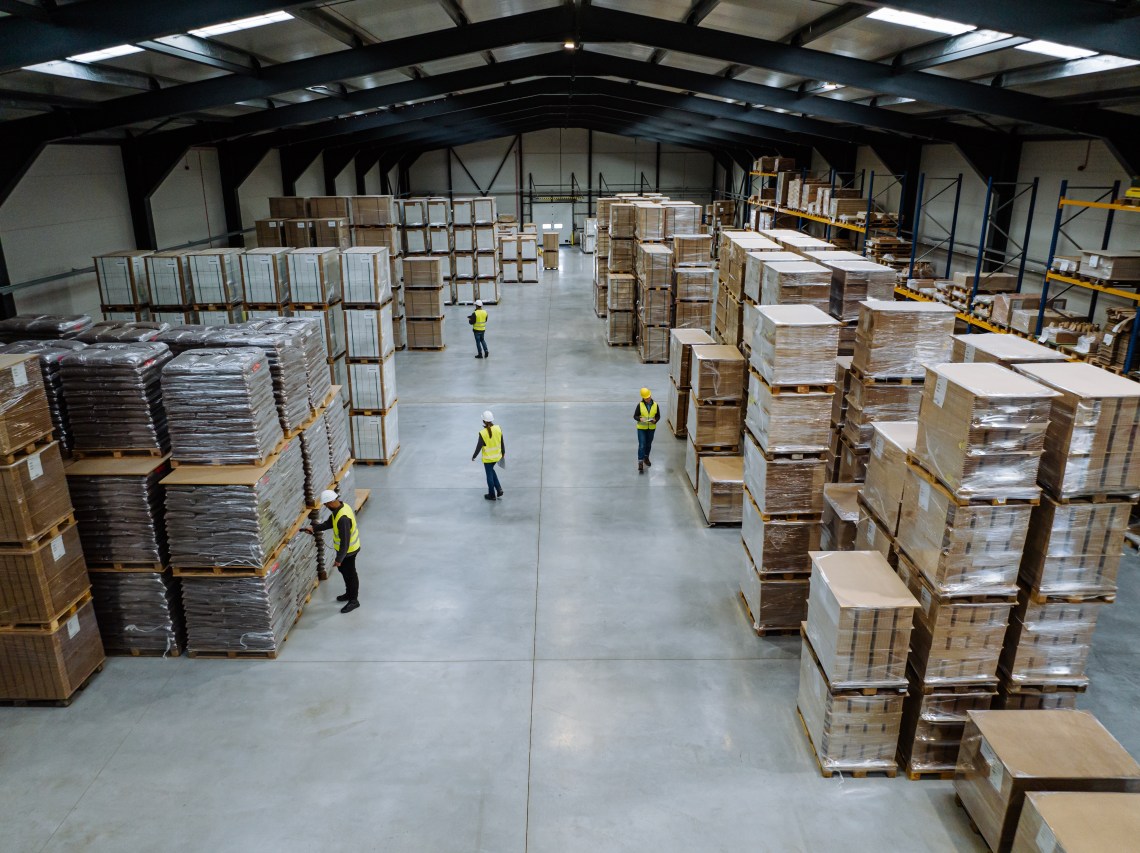
In today’s fast-moving supply chain environment, warehouse inventory accuracy has become a critical factor affecting operational efficiency, customer satisfaction, and business profitability. Traditional inventory management methods, such as manual counting and barcode scanning, have helped companies manage stock for decades. However, as warehouses become larger and product volumes increase, these methods often struggle to meet the requirements of modern logistics.
Inventory errors caused by misplaced items, incorrect data entry, missed scans, and delayed updates can lead to stock shortages, overstocking, shipment delays, and unnecessary labor costs. For businesses operating in industries such as manufacturing, retail, e-commerce, healthcare, and logistics, maintaining accurate inventory information is no longer optional—it is essential.
Radio Frequency Identification (RFID) technology provides an advanced solution by enabling automatic identification and real-time tracking of inventory items. Unlike traditional barcode systems, RFID allows multiple items to be identified simultaneously without requiring direct line-of-sight scanning. By integrating RFID tags, readers, antennas, and warehouse management systems, companies can significantly improve inventory accuracy and achieve more efficient warehouse operations.
RFID (Radio Frequency Identification) is a wireless communication technology that uses radio waves to exchange data between RFID tags and RFID readers. In a warehouse environment, each product, pallet, container, or asset can be attached with an RFID tag containing a unique identification number and relevant product information.
The basic RFID inventory management process includes three main components:
1. RFID Tags
RFID tags are attached to inventory items or packaging. Each tag stores unique information, such as product ID, batch number, manufacturing date, or location data. Depending on application requirements, companies can choose different types of RFID tags, including UHF RFID tags for long-range identification, industrial RFID tags for harsh environments, or customized RFID labels for retail products.
2. RFID Readers and Antennas
RFID readers communicate with tags through radio frequency signals. When products pass through an RFID reading area, the reader automatically captures tag information and sends the data to the warehouse management system.
Fixed RFID readers installed at warehouse entrances, loading docks, or storage areas can continuously monitor inventory movement. Handheld RFID readers provide flexibility for inventory checks and warehouse inspections.
3. Warehouse Management System (WMS)
RFID data is integrated into warehouse management software, allowing managers to view real-time inventory information, track product locations, and analyze warehouse activities. This creates a transparent and automated inventory management process.
How RFID Improves Warehouse Inventory Accuracy
One of the biggest causes of inventory inaccuracies is human error. Manual counting requires employees to scan or record products individually, which increases the possibility of mistakes during busy warehouse operations.
RFID technology automates the data collection process. When products equipped with RFID tags enter or leave a warehouse, RFID readers automatically capture their information without manual intervention.
For example, during receiving operations, employees no longer need to scan each barcode one by one. A pallet containing hundreds of products can be identified within seconds as it passes through an RFID gate. The system automatically updates inventory records, reducing errors caused by missed scans or incorrect data entry.
By minimizing human involvement in repetitive tasks, RFID helps warehouses maintain more accurate inventory information.
Traditional inventory systems often rely on periodic stock counting. This means warehouse data may not reflect actual inventory conditions until the next physical check is completed.
RFID enables real-time inventory visibility by continuously tracking product movements. Whenever an item is received, moved, stored, picked, or shipped, the system can automatically record the transaction.
This real-time capability helps warehouse managers answer important questions:
How many products are currently available?
Where is a specific item located?
Which products have been shipped?
Are there inventory discrepancies?
With accurate and updated information, companies can make better purchasing decisions, reduce unnecessary stock levels, and prevent inventory shortages.
Physical inventory counting is traditionally one of the most time-consuming warehouse activities. Employees may spend days or even weeks checking stock manually, especially in large distribution centers.
RFID dramatically improves inventory counting efficiency. Unlike barcode systems that require each item to be scanned individually, RFID readers can identify hundreds of tags simultaneously.
Using handheld RFID readers, warehouse employees can quickly scan shelves, racks, and storage areas without removing products. The system automatically compares actual inventory with database records and identifies missing or misplaced items.
This allows companies to perform more frequent inventory checks while reducing labor costs and operational interruptions.
Inventory accuracy is not only about knowing how many products exist—it is also about knowing where products are located.
In large warehouses, misplaced items can create significant problems. Employees may waste time searching for products, orders may be delayed, and inventory records may become inaccurate.
RFID helps improve warehouse organization by providing location tracking capabilities. When products are moved between storage areas, RFID systems can record their movement history.
For example, if a pallet is transferred from receiving to a storage rack, the RFID system automatically updates its location. Warehouse employees can quickly find products through the warehouse management system instead of manually searching through storage areas.
This improves picking efficiency and reduces inventory discrepancies caused by lost or misplaced goods.
Receiving and shipping are two critical stages where inventory errors frequently occur.
During receiving, incorrect quantities or wrong product identification can affect the entire supply chain. RFID enables automatic verification by comparing incoming products with purchase orders stored in the system.
During shipping, RFID readers can confirm that the correct products are loaded onto the correct vehicles. If an incorrect item is detected, the system can immediately alert employees.
This reduces shipping mistakes, improves order fulfillment accuracy, and enhances customer satisfaction.
Modern warehouses are increasingly adopting automation technologies such as Automated Guided Vehicles (AGVs), robotic systems, and artificial intelligence-based management platforms.
RFID plays an important role in building smart warehouses by providing reliable identification data. Robots and automated equipment can use RFID information to locate products, manage inventory movement, and optimize warehouse workflows.
When RFID systems are combined with IoT platforms and warehouse management software, companies can create a connected logistics environment where inventory information flows automatically across different operational processes.
RFID vs Barcode: Why RFID Provides Higher Inventory Accuracy
Although barcode technology remains widely used, RFID offers several advantages for inventory management:
No Line-of-Sight Requirement
Barcodes require direct scanning, while RFID tags can be read through certain materials without direct visibility.
Multiple Tag Reading
Barcode scanners typically process one item at a time. RFID readers can identify hundreds of tagged items simultaneously.
Higher Data Capacity
RFID tags can store more information than traditional barcodes and can support additional product details.
Real-Time Tracking
RFID provides continuous monitoring of inventory movement, while barcode systems usually depend on manual scanning events.
Because of these advantages, RFID is becoming an increasingly popular choice for companies seeking higher inventory accuracy and operational efficiency.
Applications of RFID in Warehouse Inventory Management
RFID inventory solutions are widely used across different industries:
Retail and E-commerce Warehousing
RFID helps retailers manage large product volumes, improve order accuracy, and support fast fulfillment.
Manufacturing Warehouses
Manufacturers use RFID to track raw materials, work-in-progress products, and finished goods throughout production processes.
Healthcare Supply Chains
Hospitals and pharmaceutical companies use RFID to manage medical equipment, medicines, and sensitive inventory.
Automotive Industry
RFID enables accurate tracking of automotive components and improves supply chain visibility.
Logistics and Distribution Centers
RFID supports efficient package tracking, sorting, and transportation management.
The Future of RFID-Based Warehouse Inventory Management
As supply chains continue to become more digital and intelligent, RFID technology will play an increasingly important role in warehouse management. The combination of RFID, artificial intelligence, cloud computing, and IoT will create more automated and predictive inventory systems.
Future warehouses will not only know what products are available but also predict demand, optimize storage space, and automatically adjust inventory strategies.
For businesses looking to improve operational efficiency, reduce costs, and build smarter supply chains, RFID provides a reliable foundation for achieving accurate and transparent warehouse management.
Conclusion
Inventory accuracy directly affects warehouse efficiency and business performance. Traditional inventory management methods often struggle with increasing product volumes and complex supply chain requirements. RFID technology solves these challenges by enabling automatic identification, real-time tracking, faster inventory counting, and improved data accuracy.
By reducing human errors, preventing misplaced inventory, and supporting warehouse automation, RFID helps companies create more efficient and reliable inventory management systems.
As industries continue moving toward digital transformation, RFID will remain a key technology for building smarter warehouses and achieving higher levels of supply chain visibility.

Detailed information and PDF

Support email contact.

Professional technical guidance.

Support email contact.



LINK

Youtube

leave a message
Scan to Wechat/Whatsapp :



 IPv6 Network Supported