
leave a message
If you are interested in our products and want to know more details,please leave a message here,we will reply you as soon as we can.



Smart Library Management: RFID Enables Self-Service Borrowing, Returns, and Fast Inventory Tracking
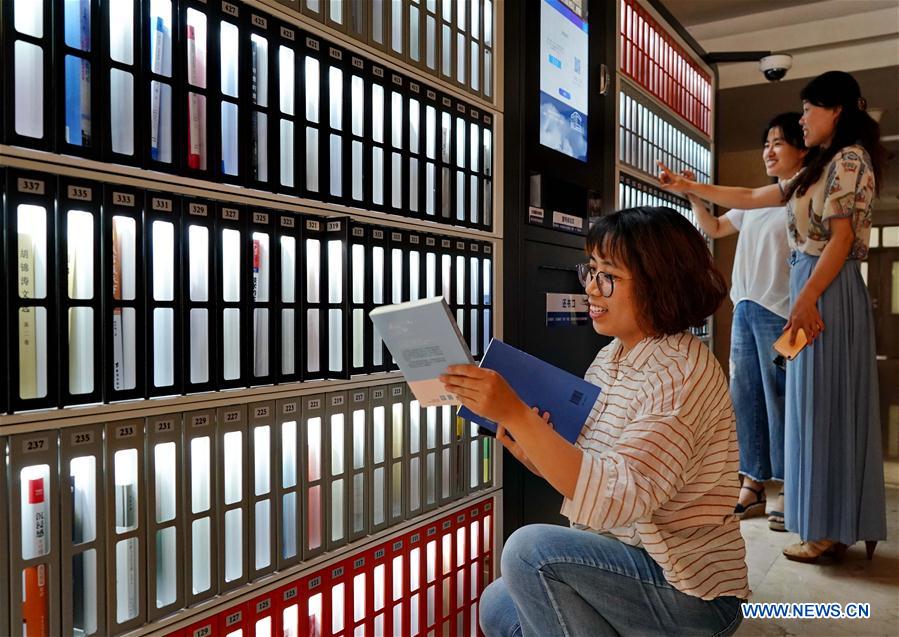
In traditional library management, book borrowing, returns, inventory checking, and anti-theft control have always been key tasks as well as the most labor-intensive parts of daily operations. Especially in university libraries, public libraries, and large corporate document centers, where collections are massive, manual registration and barcode scanning often result in low efficiency. This not only increases the workload of staff but also affects the borrowing experience of readers. With the continuous development of smart library construction, RFID technology has become an important tool for the digital upgrade of library management. By enabling self-service borrowing and returning as well as rapid inventory checking, RFID significantly improves both operational efficiency and service quality.
RFID, or Radio Frequency Identification, is an automatic identification technology that uses wireless radio signals for contactless data recognition. Each book is attached with an RFID electronic tag containing a built-in chip that stores key information such as book ID, classification details, and shelf location. When a book passes through RFID reading equipment, the system can automatically identify and read the information without requiring manual scanning one by one.
One of the most significant advantages of RFID in library borrowing scenarios is the realization of self-service borrowing and returning. In traditional borrowing processes, readers often need to wait in line while staff scan each book individually for registration. During peak periods such as the beginning of semesters, exam seasons, or before holidays, long queues are common. After deploying RFID self-service borrowing and returning machines, readers only need to place multiple books in the sensing area at the same time, and the system can instantly identify all book information and automatically complete the borrowing registration. The entire process takes only a few seconds, greatly reducing waiting time and significantly improving the user experience.
The return process also becomes much more efficient. Readers can complete the operation through self-service return machines, where the system automatically identifies books and updates their borrowing status. Some smart libraries are even equipped with 24-hour self-service return boxes, allowing readers to return books even when the library is closed, truly achieving round-the-clock service. This convenience not only improves service quality but also effectively reduces the workload at manual service counters.
In addition to borrowing and returning management, book inventory checking has always been one of the most challenging tasks for libraries. Traditional manual inventory requires staff to check book codes shelf by shelf and book by book, which is time-consuming, labor-intensive, and prone to omissions. In large libraries with hundreds of thousands of books, inventory checking may take days or even weeks, seriously affecting normal operations.
RFID technology has completely changed this situation. Staff only need to carry handheld RFID inventory devices and walk slowly between bookshelves. The device can automatically read multiple book tags on the shelves without removing books one by one. The system automatically compares the collected data with the library database and quickly identifies misplaced books, missing books, lost items, and abnormal statuses. This greatly improves both inventory accuracy and working efficiency. Tasks that previously required weeks can now be completed within days or even hours.
RFID also plays an important role in library anti-theft management. Traditional libraries often rely on magnetic strip anti-theft systems, which are easy to damage and difficult to manage. RFID access control systems can automatically identify the borrowing status of books when they pass through the entrance or exit gates. If a book has not completed the proper borrowing procedure, the system immediately triggers an alarm. This not only improves anti-theft management but also reduces false alarms and enhances the overall intelligence of library operations.
For library managers, RFID systems also provide more accurate data support. The system can track book borrowing frequency, popular book rankings, circulation efficiency, and collection utilization rates in real time, helping management optimize purchasing decisions and collection structures. For example, by analyzing borrowing data, libraries can promptly replenish popular books while reducing unnecessary stock of low-demand books, achieving more scientific resource allocation.
In university libraries, RFID can also be integrated with campus card systems to realize identity authentication, borrowing permission management, and credit system linkage. Students can complete borrowing operations simply by using their campus cards, further improving convenience and unified management. This intelligent service model has become an important part of modern campus digital construction.
Of course, the application of RFID in libraries is not limited to large public libraries. School libraries, corporate archives, hospital document centers, and even community reading spaces can all benefit from RFID for more efficient book management. As the cost of RFID tags continues to decrease, the threshold for system deployment is becoming lower, and the adoption rate among small and medium-sized libraries is accelerating.
In the future, with the further integration of artificial intelligence, big data, and the Internet of Things, smart libraries will move toward even greater automation and intelligence. RFID is not only a management tool for books but also an important infrastructure for smart library construction. By enabling self-service borrowing and returning, rapid inventory checking, intelligent anti-theft control, and data analysis, RFID is redefining the service model of modern libraries.
Libraries are not only spaces for storing knowledge but also important carriers of urban culture and education. With the help of RFID technology, library management is transforming from traditional manual operations to intelligent management. This not only improves efficiency but also makes reading services more convenient and user-friendly. In the future, RFID will create even greater value in more library management scenarios and drive library services into the true era of intelligence.

Detailed information and PDF

Support email contact.

Professional technical guidance.

Support email contact.



LINK

Youtube

leave a message
Scan to Wechat/Whatsapp :



 IPv6 Network Supported